
Prototype #1
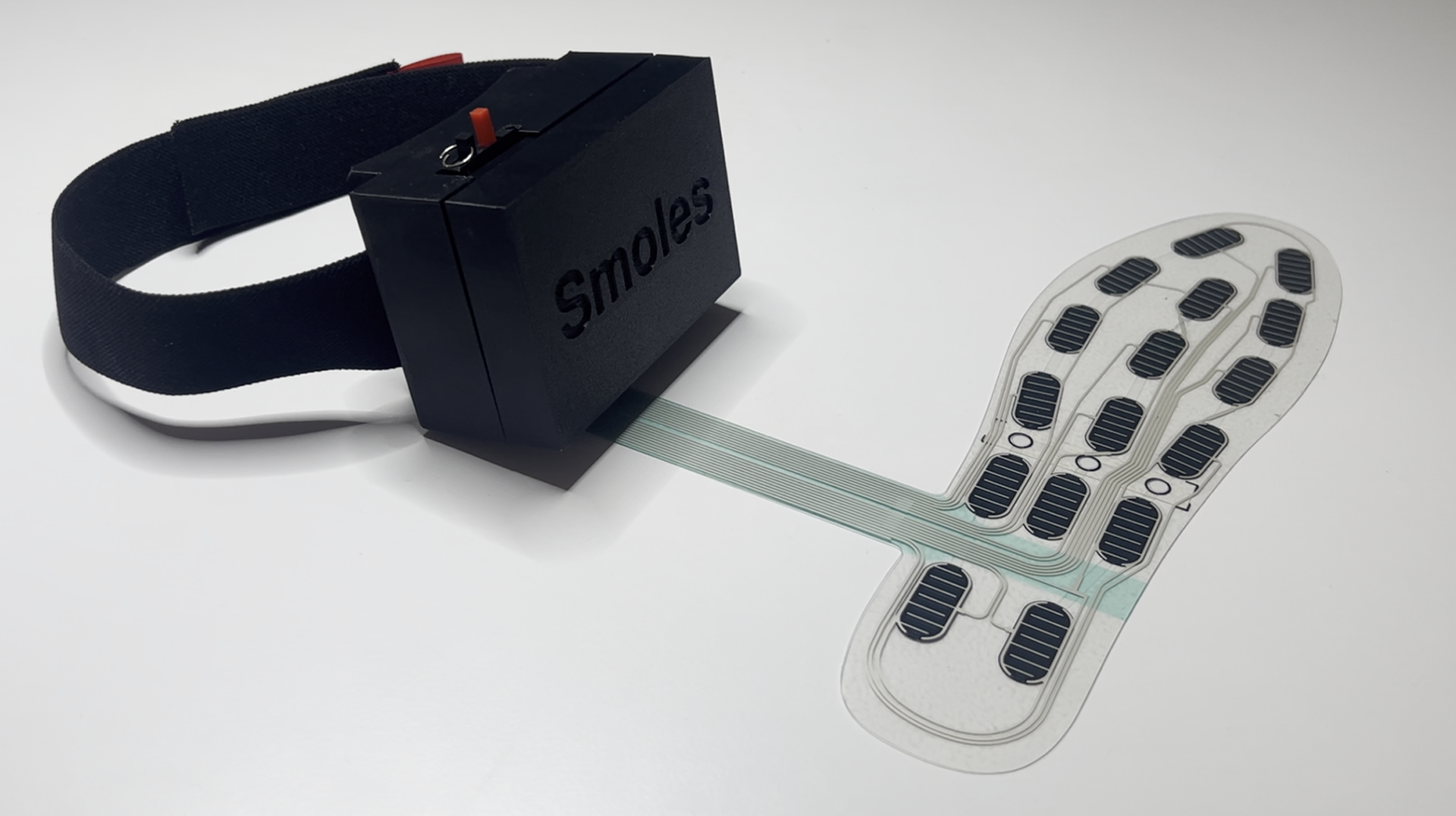
The prototype of the smart insole hardware is designed to be a versatile and modular platform for testing various use cases and hardware configurations. The primary components and features are outlined below:
Key Attributes and Features
Modular Board Design:
Support for up to 6 Daughter Boards:
ESP32 Module: Provides Wi-Fi and Bluetooth Low Energy (BT-LE) connectivity, essential for communication with host devices such as mobile phones or computers.
Battery Charger Module: Manages charging with USB input, supporting 1A charging current and includes overcharge and undercharge protection for safety.
IMU & RTC (I2C Interface):
Inertial Measurement Unit (IMU): Comprises a three-axis accelerometer, three-axis gyroscope, and a magnetometer for comprehensive motion sensing.
Real-Time Clock (RTC): Ensures precise time synchronization for measurement accuracy and supports low-power modes to extend battery life.
Optional MicroSD Module (SPI Interface): Allows for data storage and logging, providing an additional layer of data security and offline data analysis capability.
Free I2C Port: Available for connecting additional sensors or peripherals, enabling further customization and expansion.
Additional Onboard Features:
Switch for Labeling: Facilitates easy identification and configuration during setup or testing.
RGB Status LED: Provides visual feedback on the system status, such as power levels, connectivity status, or error states.
Two Buzzers for Haptic Feedback: Provides sensory feedback to users, useful in various scenarios like alerts for physical therapy exercises or gait analysis.
Two Jumper-Switched Ports for External Buzzers: Expands the capability for more pronounced haptic or acoustic feedback when connected to external devices.
Power Management:
Battery Capacity: 1200mAh, providing 19.5 hours of continuous measurement or up to one month in a smart measurement mode, optimizing battery life by activating sensors and recording data only when necessary.
Power Switch: Includes a secondary switch for battery saving and control, allowing the device to enter low-power modes when not actively in use.
Physical Specifications:
Dimensions: 85x55x25 mm³, designed to be mounted on a shoe or ankle. The larger size accommodates a variety of components and configurations, making it ideal for prototyping and testing different hardware setups.
Added Value to Customers
Versatility and Customization:
The modular design allows easy swapping and upgrading of components, enabling users to tailor the hardware to specific applications such as gait analysis, posture monitoring, or sports performance tracking.
Comprehensive Sensing and Feedback:
With a full suite of sensors (accelerometer, gyroscope, magnetometer), the device can capture detailed movement and orientation data. The haptic feedback system enhances user interaction, providing immediate sensory responses during activities.
Extended Battery Life and Safety:
The robust power management system ensures long operational periods, critical for continuous monitoring applications. Safety features like overcharge and undercharge protection protect both the device and the user.
Data Connectivity and Storage:
The ESP32 module's BT-LE capability ensures seamless data transmission to host devices, facilitating real-time monitoring and data analysis. The optional microSD storage adds an extra layer of reliability, especially in scenarios where continuous data logging is essential.
Scalability and Future-Proofing:
The available I2C and SPI interfaces provide avenues for future expansion, allowing integration with additional sensors or devices, which can be pivotal in adapting to evolving user needs or new market requirements.
This smart insole hardware prototype offers a comprehensive and customizable solution for various applications in health monitoring, sports, and rehabilitation, providing users with a versatile and adaptable tool for a wide range of scenarios.
Description of our product
Thank you!